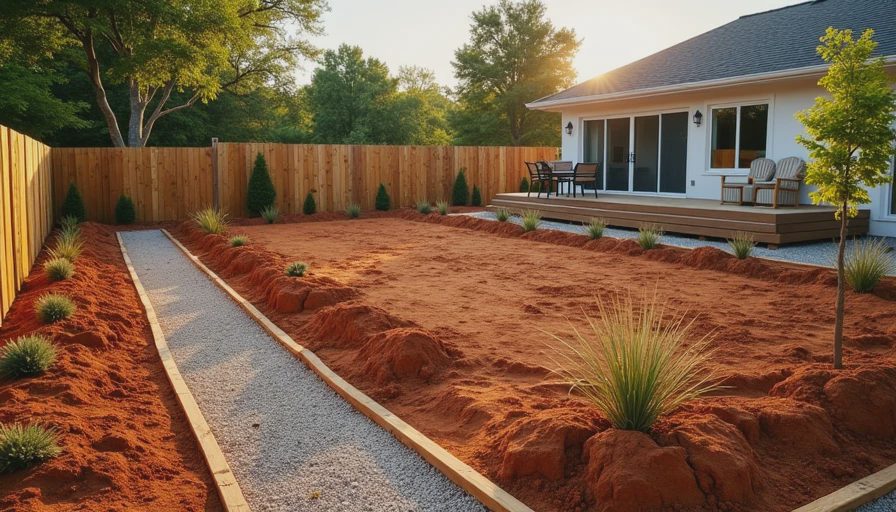
The Dirt Patch Phase Is Real
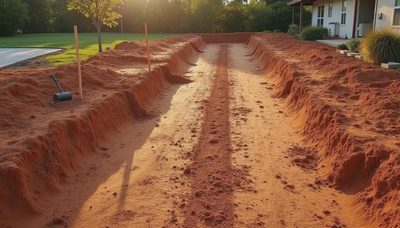
When we closed in late 2023, the front yard had builder sod, but the backyard looked like a construction zone — red clay, rocks, random weeds, and one sad tree. Charlie called it “the moon yard.” I knew from my Pulte days that this is completely normal, but most new homeowners panic and start throwing money at it immediately.
Year one landscaping isn’t about perfection. It’s about survival, smart foundations, and making the space usable without blowing the budget. Here’s exactly what we did, what we spent, and the mindset that kept us sane.
Why Dirt Patches Are Normal in New Builds
Builders grade for drainage and erosion control, not beauty. Your lot gets seeded or lightly sodded at best. Then rain, kids, dogs, and settling turn it into a mess. Expect bare spots, especially in high-traffic areas and along the foundation. Fighting it too early usually wastes money.
Year One Priorities (Do These First)
1. Drainage and Grading Fixes
We started here after the first heavy rain created rivers toward the house.
Hired a landscaper for minor regrading and French drains near the foundation: $1,650
Installed simple downspout extensions and splash blocks: $95
This prevented moisture issues and gave us a stable base for everything else.
2. Create Usable Zones Instead of Full Coverage
We didn’t try to sod the entire yard.
Seeded fescue in the main play area: $320 (seed, fertilizer, straw)
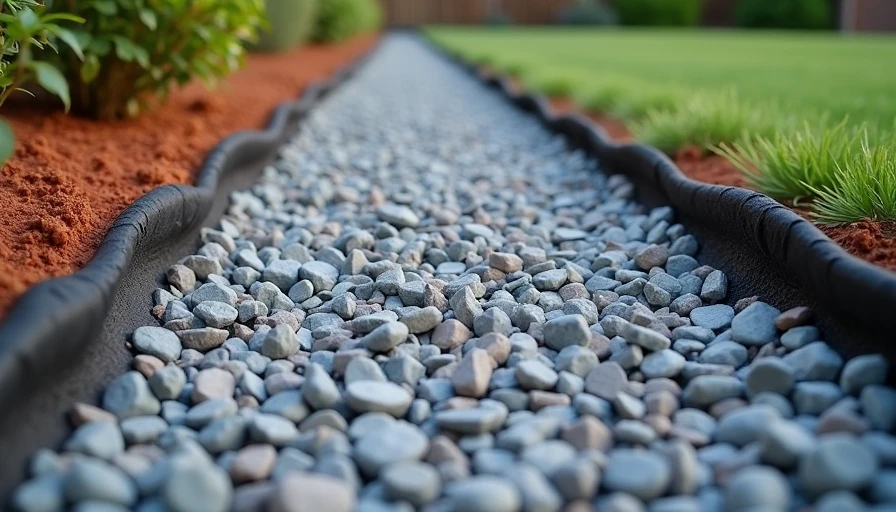
Installed a 4-ft gravel pathway from back door to future patio: $680
Added wood chips under the playset: $180
These zones made the yard functional immediately while the rest slowly improved.
3. Strategic Planting for Impact
Planted a few small trees and shrubs in fall (cheaper and better establishment): $450
Used mulch heavily around new plants: $220
Added perennials and ground cover in key beds: $180
We focused on high-visibility areas near the house and patio.
What We Delayed (And Why It Was Smart)
Full irrigation system: Used soaker hoses + smart timer instead ($160)
Fancy retaining walls or terraces: Handled the natural slope for now
Mature landscaping: Started small and let it grow
Perfect lawn: Accepted some patches and focused on “good enough”
Budget Breakdown — Real Year One Numbers
Grading & drainage: $1,745
Seeding & basic turf: $320
Gravel path & edging: $680
Playset area surfacing: $180
Plants, trees & mulch: $850
Tools & misc: $290
Total Year One Landscaping: ~$4,065
That’s a fraction of what many families spend trying to make it perfect immediately.
Tools and Techniques That Saved Us Money
Rented a plate compactor for the gravel path
Used free soil testing from the local extension office
Bought plants in bulk from nursery sales
Learned basic edging and mulching techniques from YouTube
The Smoker Station Exception
Yes, I built the full smoker station early. Sometimes you do the fun project first. It sits on a small concrete pad tied into the gravel path and gets used weekly. No regrets.
Lessons From Watching Hundreds of New Builds
Families who succeeded long-term:
Accepted year one as transitional
Focused on usable space over Instagram looks
Built incrementally as they lived in the house
Worked with the natural drainage and slope
The ones who tried to finish everything in month one often overspent and still had issues after settling.
Practical Year One Landscaping Checklist
Fix major drainage after first rain
Build at least one mud-free path from house
Establish a play/turf zone for kids & dogs
Mulch and plant high-impact, low-cost items
Document progress with photos
Plan phased expansions for year two
The Progress Mindset
Six months in, our yard still had dirt patches, but we had a usable patio area, a play space, and a functional path. Two years later it looks intentional — not perfect, but clearly ours.
A new house isn’t perfect. But it can be yours.
And sometimes that means embracing the dirt patches while you build the foundation for something better.
Your Budget Landscaping Mindset
Stop comparing your year-one dirt patch to a neighbor’s year-five masterpiece. Focus on making your space work for your family right now. The rest will come.
Print the checklist. Walk your lot after rain. Start small, stay smart, and enjoy the process.
No letters yet — pray write the first.